Fall & Winter Outdoor Lighting FAQ: Timers, Weather & Why Fall Is the Best Time to Install
Fall and winter are when outdoor lighting earns its keep. Sunset arrives before dinner, daylight saving time ends, and suddenly your home spends most of its waking hours in the dark. That's exactly why September through January is the busiest season in the landscape lighting industry — and why fall is the smartest time to get a system installed. Here are the fall and winter outdoor lighting questions North Georgia homeowners ask most.
Why is fall the best time to install landscape lighting?
Early fall is widely considered the ideal window. The ground is still workable for burying cable and setting fixtures, temperatures are comfortable for crews, and you can finalize your design and weatherproofing before winter arrives. Once the ground hardens or freezes, installation becomes slower, more difficult, and more expensive.
There's also a payoff you feel immediately: with sunset arriving earlier every week, a system installed in the fall gets used far more hours per night than one installed in June. You start enjoying it the day it's turned on.
How do I adjust my lighting timer for daylight saving time?
This is the most common fall service call we get. If you have an older manual or mechanical timer, you'll need to recalibrate it when daylight saving time begins and ends, after any power outage, and as sunset shifts through the seasons — realistically at least four times a year.
The better fix is a smart or astronomical timer. These track sunrise and sunset for your location automatically and adjust themselves through daylight saving time and seasonal changes, so your lights always come on at dusk without you touching anything. If you're still resetting a dial twice a year, upgrading the controller is a small change with a big convenience payoff.
Do LED outdoor lights work in cold weather?
Yes — and cold actually suits them. LEDs run cooler than old halogen lamps and handle low temperatures well, often operating slightly more efficiently in cold air. They also switch on instantly with no warm-up period, unlike some other lighting technologies. A properly installed low-voltage LED system runs reliably through a North Georgia winter.
How does winter weather affect my lighting system?
Winter brings a few specific stresses: moisture from rain and the occasional ice or snow, freeze-thaw cycles that can heave fixtures slightly out of alignment in our red clay soil, and storm activity. Quality brass and copper fixtures with sealed, watertight connections handle all of it. Cheap aluminum and plastic fixtures with unsealed connectors are where winter failures happen.
Snow and heavy leaf fall can also physically block or bury low fixtures, which is a simple fix — but a good reason for a seasonal check.
What fall maintenance does outdoor lighting need?
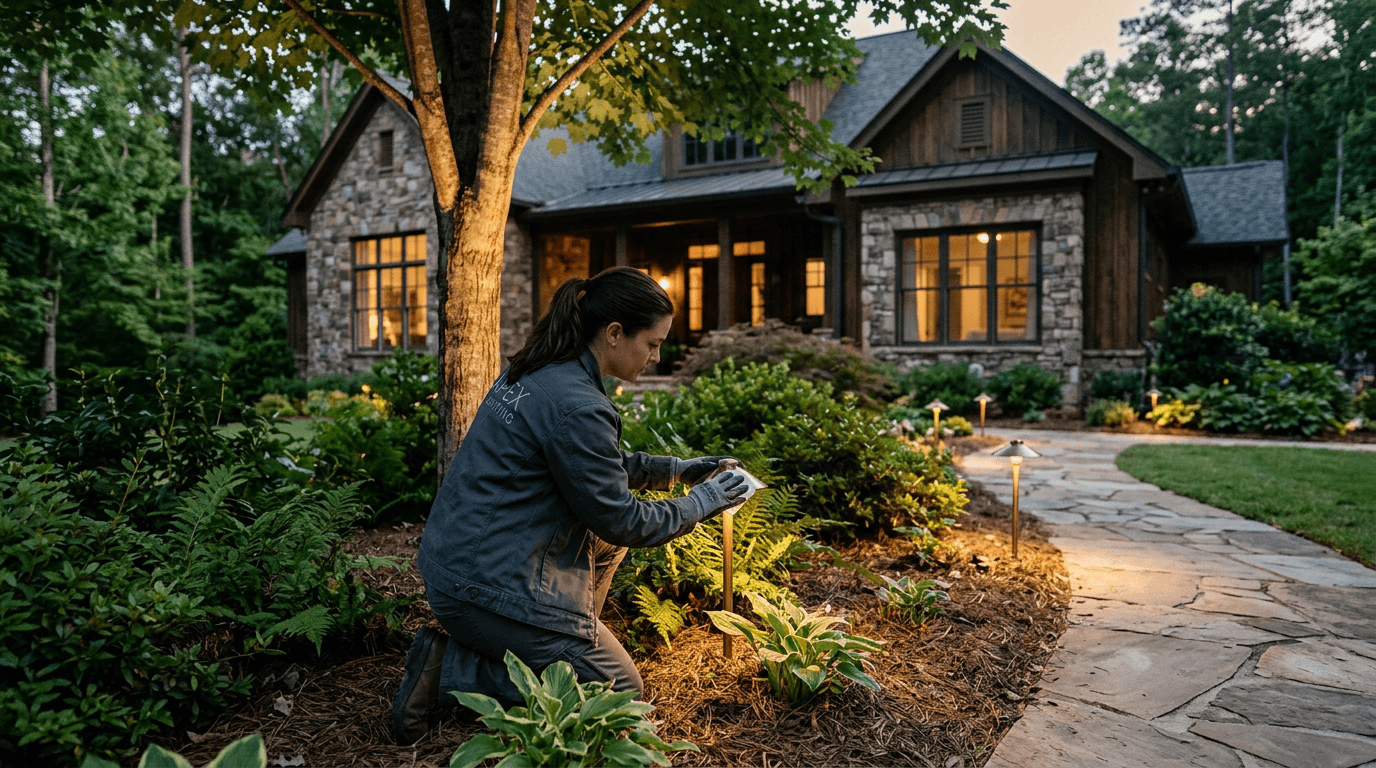
Fall is the ideal time for a service visit. The checklist: clear fallen leaves and mulch away from fixtures, clean lenses so you get full brightness during the darkest months, re-aim any fixtures that shifted, trim back growth that's blocking light, inspect wire connections, and update your timer or controller for the new sunset schedule.
Doing this in early fall means your system is at full performance heading into the season when you'll use it most — including for holiday guests.
Should I light bare trees in winter?
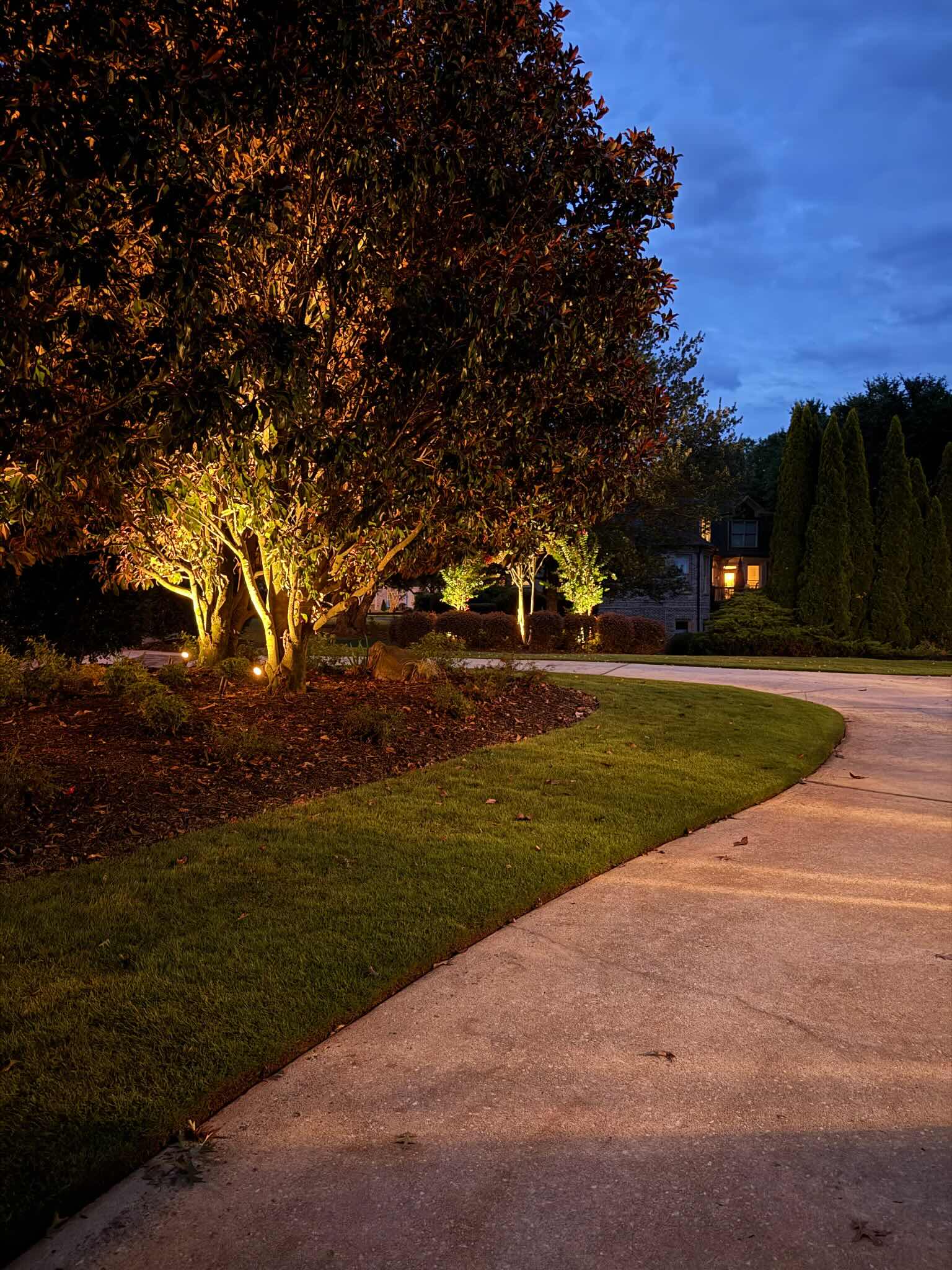
Absolutely, and it's an underrated effect. Deciduous trees lose their leaves, but uplighting a bare tree reveals its branch structure and trunk in a dramatic, sculptural way that you simply can't see in summer. Crape myrtles and Japanese maples in particular look striking in winter. Pairing deciduous trees with evergreens like hollies and Leyland cypress keeps the landscape full and lit year-round.
Can landscape lighting and holiday lighting work together?
Yes, and the best results come from planning them together. Your permanent landscape lighting handles trees, beds, pathways, and facade washing, while holiday lighting outlines rooflines and adds seasonal color. When one company designs both, the transformer capacity, wiring, and controls are coordinated so nothing is overloaded and everything can be scheduled on one system.
It also means one call in January to take the holiday lights down — while your landscape lighting keeps working all winter.
Get on the fall schedule
Fall through January is our peak season, and the calendar tightens quickly. If you want your system designed, installed, and dialed in before the darkest and busiest weeks of the year, schedule a free consultation now and we'll get you on the fall schedule.